

Plant Sensors vs Soil Moisture Sensors
Soil moisture sensors have been the default irrigation management technology for decades. They’re well understood, widely available, and relatively affordable. But more growers are asking a fundamental question: if the goal is to keep trees healthy and productive, shouldn’t you measure the tree itself?
Plant-based sensors like FloraPulse measure stem water potential (SWP) — a direct reading of the water tension inside the tree’s vascular system. Soil sensors measure volumetric water content or soil matric potential in the root zone. Both provide useful data, but they answer fundamentally different questions.
Side-by-Side Comparison
| Feature | Plant Sensors (FloraPulse) | Soil Moisture Sensors |
|---|---|---|
| What It Measures | Water tension inside the plant (SWP) | Water content or tension in the soil |
| What It Tells You | How stressed the plant actually is | How much water is in the ground |
| Spatial Variability | Low — plant integrates its entire root zone | High — readings change within inches |
| Sensor Placement | In the trunk, one per tree | In the soil, multiple depths recommended |
| Affected by Soil Type | No — measures the plant directly | Yes — calibration varies by soil texture |
| Deficit Irrigation | Excellent — directly measures stress level | Difficult — hard to infer plant response from soil data |
| Continuous Monitoring | Automated, 24/7 data logging | Automated, 24/7 data logging |
| Scientific Basis | Hundreds of peer-reviewed studies on SWP | Decades of soil science research |
The Core Difference: Supply vs. Response
Soil moisture sensors measure the supply side of the water equation — how much water is available in the ground. Plant sensors measure the demand side — how the tree is actually responding. A tree’s water status depends on far more than soil moisture: atmospheric demand (VPD), root health, canopy size, crop load, and soil salinity all play a role. The plant integrates all of these factors into a single signal — stem water potential.
Two blocks with identical soil moisture can have trees in very different states of stress. On a hot, windy afternoon with high evaporative demand, a tree can become significantly stressed even when the soil has adequate moisture. A soil sensor says “everything is fine” while the tree is struggling.
Key Insight: The plant is the best sensor of its own water status.
Research shows that midday stem water potential is more sensitive to irrigation level than other plant-based indicators, and correlates strongly with both yield and fruit quality in tree crops. Because SWP integrates soil moisture, atmospheric demand, and root function into one measurement, it captures stress that soil sensors miss.
The Soil Variability Problem
Anyone who has installed soil moisture sensors knows the challenge: move the sensor a few inches, and you get a different reading. Soil texture, compaction, root density, rock content, and organic matter vary at micro scales. Research confirms that some sensors measure as little as 10 cm³ of soil, making placement critical — your sensor might be in a wet pocket while the roots nearby sit in dry soil.
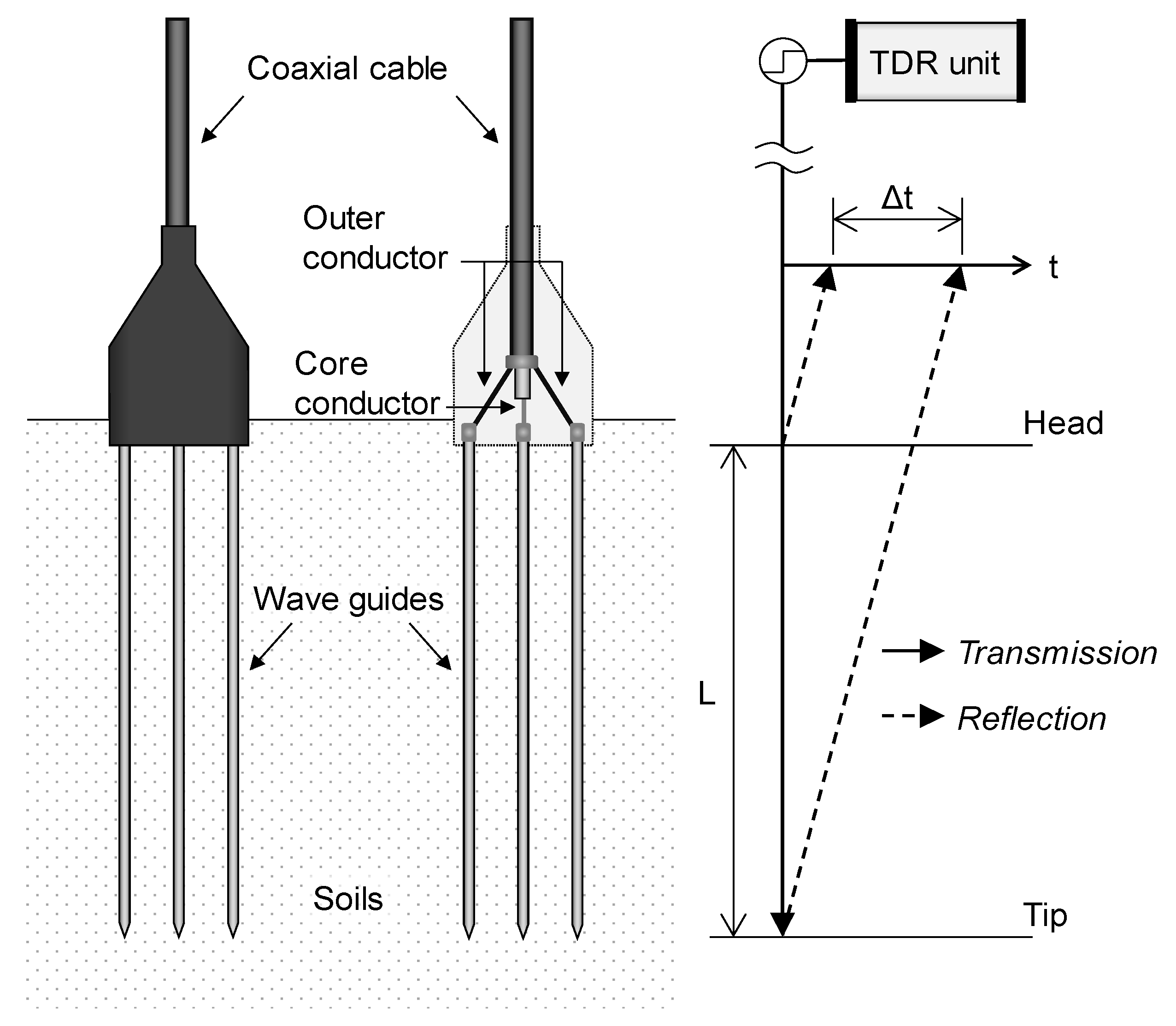
To get reliable soil data, you typically need multiple sensors at multiple depths per block, and even then you’re sampling a tiny fraction of the root zone. The plant’s roots extend throughout the soil profile and across the entire wetted area. When you measure the plant’s water status, you get the integrated response of the entire root system — no sampling bias, no placement guesswork.
Common Soil Sensor Technologies
Not all soil moisture sensors are the same. Here are the most common types and their trade-offs:
| Sensor Type | How It Works | Key Limitation |
|---|---|---|
| TDR (Time Domain Reflectometry) | Sends electromagnetic pulse through soil; measures travel time to infer water content | Higher cost; measures small soil volume around probe |
| Capacitance / FDR | Measures dielectric constant of surrounding soil using radio frequencies | Sensitive to soil salinity and bulk EC; requires soil-specific calibration |
| Neutron Probe | Emits neutrons slowed by hydrogen in water; counts reflected neutrons | Radioactive source requires licensing; costs $10,000+; labor-intensive |
| Gypsum / Granular Matrix | Measures electrical resistance that changes as surrounding soil wets or dries | Degrades over time; slow response; limited accuracy range |
Each technology has merits, but they share the same fundamental limitation: they measure the soil, not the plant. Even the most accurate soil sensor cannot tell you how your tree is responding to the water that’s available. For a deeper look at how plant-based measurements differ from other approaches, see our comparisons with the pressure chamber and dendrometers.
Best For: Choosing the Right Sensor
Plant sensors are best for:
- Tree crops — almonds, cherries, olives, prunes, apples
- Vineyards — wine grapes, table grapes
- Regulated deficit irrigation (RDI) programs
- Variable soils where placement is a gamble
- High-value crops where quality depends on precise water management
Soil sensors are best for:
- Annual crops — corn, cotton, vegetables
- Uniform soils with consistent texture across the field
- Full irrigation strategies (refill-point scheduling)
- Monitoring drainage and soil water movement
- As a secondary check alongside plant sensors
Can You Use Both? Absolutely.
Plant sensors and soil sensors are complementary, not mutually exclusive. The most sophisticated irrigation programs use plant-based sensors as the primary decision tool (telling you when and how much to irrigate) and soil sensors as a secondary check (confirming water reaches the root zone and monitoring drainage).
Soil sensors tell you what’s happening underground; plant sensors tell you what the tree thinks about it. Both perspectives have value. But if you can only choose one, measuring the plant gives you the more actionable signal.
Frequently Asked Questions
Can I use soil sensors and plant sensors together?
Yes, and many advanced operations do. Plant sensors serve as the primary irrigation trigger — they tell you exactly how stressed the tree is and when to irrigate. Soil sensors add context by showing how quickly water drains, whether it reaches the intended depth, and how the soil profile changes over the season.
Why doesn’t soil moisture tell the whole story?
Soil moisture is one input into plant water status, but not the only one. Atmospheric demand (temperature, humidity, wind), root health, canopy size, and crop load all affect how a tree experiences available water. On a high-VPD day, a tree can be severely stressed even with moist soil. Plant sensors capture the net effect of all these factors; soil sensors capture only one.
How does FloraPulse compare to capacitance sensors?
Capacitance sensors (like Sentek, AquaCheck, or EnviroSCAN) measure soil dielectric properties at one or more depths. They require soil-specific calibration, are sensitive to salinity, and sample a small volume that may not represent the whole root zone. FloraPulse measures the plant directly, bypassing soil variability entirely. For tree crops and vines, plant-based data is more directly tied to irrigation decisions. See our technology page for how SWP measurement works.
Do I still need soil sensors if I have FloraPulse?
Not necessarily. FloraPulse provides the actionable signal — actual plant stress — that drives irrigation timing and volume decisions. Soil sensors can add useful secondary information (drainage rate, wetting depth), but many FloraPulse customers find that plant data alone gives them everything they need to manage irrigation effectively.
See the Plant’s Perspective
Ready to move beyond soil data and see what your trees are actually experiencing? Contact our team to learn how FloraPulse stem water potential sensors can transform your irrigation management with direct, continuous plant measurements.